Thursday, December 6, 2018

How We Will Save Our Oceans.


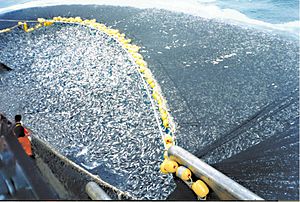
Image result for overfishing in fishing industries

Over 1 million animals who claim the ocean to be their home die annually from plastic, or foreign materials in the ocean. Even more, close to 2,700 million fish, are caught annually for consumption from the growing market. Endangered marine animals, like Hammerhead Sharks, saw-fish and Atlantic White Tips, have a large illegal market leading to the over fishing of said animals. Over 100,000 dollars, or 2,000 pounds of smuggled shark fins, have been found (in one incident) in the Black Markets of China. Agencies such as the C.I.A have dedicated teams tasked with finding and stopping illegal dealings like this, yet over 73 million sharks are killed a year from fin trafficking. These animals are even "protected under Hong Kong law and an international treaty that restricts their trade"(Actman). Humans are the main foe, to marine life.

garbage-floating-in-ocean


               Are we willing to sacrifice our lifestyle for the health of this planet? This is an important question that you should ask yourself. Is it more important to have diversity of fish in order to sustain a population of larger aquatic animals, or the option of fish at every meal? Although this sounds like something that is already on a direct track to disaster, there are many ways that the common man can help.  For one: stopping recklessly littering, many marine animals such as jellyfish, fish and penguins, have slowly starved/suffocated from slow degrading entangled in their organs. If you want a more active approach, organization such as the Defenders of Wildlife are recruiting everyday citizens to fight ruthlessly for animals who cannot defend themselves. And for those who cannot donate their time, monetary donations are always a solution. For those who are costumers of the fin industry,"fins from protected shark species are often mixed in with legal ones"(Actman), so it's better to boycott the industry all together. Fish are dying, sharks are being killed, and and our planet is becoming sick all at the hands of humans, instead of the problem, we can be the solution. 

Glossary:
Monetary: relating to money or currency.
          Smuggled: convey (someone or something) somewhere secretly and illicitly.
          Black Market: an illegal traffic or trade in officially controlled or scarce commodities 

Tuesday, November 20, 2018

Are our fish making us sick? Will there be any left?


Aeromonas hydrophila bacteria
Every year the amount of pollution in the ocean increases, and with it brings more sick fish. Because of toxicity from manmade pollutants, which interfere with the natural pH and temperature of the ocean, the amount of healthy fish dwindles. Ingestion of toxins such as pesticides, detergents and fertilizers directly cause disease development in marine animals that are eaten such as fish and/or shrimp. The Image on the right is the bacteria Aramonas Hydrophilia, which attacks internal organs while often slowly and painfully eating off fins and tails. Bacteria, including Aramonas Hydrophilia, such as Pseudomonas fluorescens and Flavobacterium can be unknowingly shared interchangeably from marine animals to humans. Within seafood that is consumed daily on a mass scale infections with Serratia and Yersina reflected contamination of waterways with domestic sewage, e.g. leaking septic tanks (Pubmed). Therefore, individuals are eating fecal bacterium in their seafood, because of the failure to contain their own waste. There are organizations in place, which any qualified person can be a part of, that specialize in the treatment of contaminated/infectious marine animals. 


Without fishing industries, many aquatic species such as Sea Bass and Atlantic Salmon would not be on the critically endangered species list. Mass, often illegal, hunting of popular in-demand fish has led to the decrease of species diversity leaving fish susceptible to disease. With the extinction of popular fish/seafood population as a whole would suffer drastically, since a 2015 study published in the journal Food Security found that fish accounted for 10 percent of the world's food security (Gibbins). Although companies searched for alternatives to ocean fishing, such as aquaculture (farm raised fish), the ability to survive in contained environments is different depending on the specific breed and often difficult and unpredictable. Therefore, this method is more expensive and less effective than high seas fishing, although it is better for the environment. Civilization must either change its reliability on mass fishing or accommodate to the dwindling of fish population in the ocean which brings the inflation of the fish market. 


                               Glossary
                 
Septic Tanks: A tank, typically underground, in which sewage is collected and allowed to decompose through bacterial activity before draining by means of a leaching field.
pH: A figure expressing the acidity or alkalinity of a solution on a logarithmic scale on which 7 is neutral, lower values are more acid, and higher values more alkaline.
Aquaculture: The rearing of aquatic animals or the cultivation of aquatic plants for food.


                                       Citations:

                                            Works Cited
Aeromonas hydrophila bacteria. Photograph. Britannica ImageQuest, Encyclopædia Britannica, 25 May 2016.
quest.eb.com/search/132_1189007/1/132_1189007/cite. Accessed 19 Nov 2018.
Cranes picking up garbage debris after first rain of the season. The Garbage boom on the Los Angeles River in Long Beach was built in 2001. Urban runoff carries an assortment of trash and debris from catch basins where a network of pipes and open channels create a pathway to the Ocean. The man made debris can include plastic bags and bottles. Photo. Britannica ImageQuest, Encyclopædia Britannica, 25 May 2016.
quest.eb.com/search/144_1507441/1/144_1507441/cite. Accessed 29 Oct 2018.
Langly, Liz. "Why Life Is so Tough for Sea Turtles." National Geographic, 14 May 2016. National Geographic, news.nationalgeographic.com/2016/05/160514-animals-science-sea-turtles-oceans/. Accessed 27 Oct. 2018.
Oil industry pollution. Photography. Britannica ImageQuest, Encyclopædia Britannica, 25 May 2016.
quest.eb.com/search/132_1234109/1/132_1234109/cite. Accessed 30 Oct 2018.
Rakutan. Biodegradable Straws. Rakutan, www.rakuten.com/shop/alltopbargains/product/7795735194744/. Accessed 30 Oct. 2018.
Schilcutt, Katharine. "Human beings: acting like jerks since we killed off the pupfish. 10 Fish You're Eating That Are Endangered Species." Houston Press, 27 Sept. 2011, www.houstonpress.com/restaurants/thanksgiving-food-traditions-include-a-variety-of-unusual-dishes-11043093. Accessed 20 Nov. 2018.